Dec 28, 2019
•
4 min read
Do It Yourself Eyeglass Cleaner
 Blog Overview
Despise dirty lenses? This in-depth guide reveals the professional secret to a DIY eyeglass cleaning solution that is safe for all coatings and easy to make at home.
The Ultimate DIY Eyeglass Cleaner: Professional Results at Home
Let’s be honest: there is nothing more distracting than a smudge right in your line of sight. Whether it’s a fingerprint, a splash of cooking oil, or just the daily buildup of facial oils, dirty lenses don’t just look bad—they can cause eye strain and headaches.
At All American Eyeglass Repair, we use professional-grade ultrasonic cleaners and proprietary solutions to make your frames shine like new. But what do you do when you’re at home and your vision starts to get cloudy?
You make your own. Here is the definitive guide to the safest, most effective DIY eyeglass cleaner.
Why Most People Clean Their Glasses Wrong
Before we get to the recipe, we have to talk about the “shirt-tail” habit. We’ve all done it—using a t-shirt, a paper towel, or a napkin to wipe our lenses.
Stop! Most fabrics contain tiny abrasive fibers (and paper towels are literally made of wood pulp). Wiping your lenses with these is like using fine-grit sandpaper. Over time, you’ll develop a “cloud” of micro-scratches that can’t be polished out.
The “Magic” DIY Cleaning Recipe
This mixture is safe for anti-reflective (AR) coatings, polarized lenses, and blue-light filters.
What You’ll Need:
- A Small Spray Bottle – (2 oz or 4 oz works best).
- Dish Soap: Use a clear, lotion-free brand (like Dawn). Avoid soaps with “moisturizers,” “essential oils,” or “hand-softening” ingredients, as these leave a greasy film.
- Water – Distilled water is best to avoid mineral spots, but tap water works in a pinch.
- Optional – Isopropyl Alcohol (70%): Only use this if your lenses do not have special coatings. If you have high-end AR coatings, stick to just soap and water.
The Instructions:
- The Mix
Fill your spray bottle 70% with water and add a few drops of dish soap. If you want a quick-drying “streak-free” finish (and your lenses are uncoated), you can fill it 50/50 with water and 70% Isopropyl alcohol.
- The Prep
Rinse your glasses under lukewarm tap water first. This washes away tiny dust particles that could scratch the lens during the wiping process.
- The Spray
Give the bottle a gentle shake and spray both sides of the lenses.
- The Rub
Use your thumb and forefinger to gently lather the soap across the lens and the nose pads (where most oil builds up!).
- The Rinse & Dry
Rinse under lukewarm water. Shake off the excess droplets.
- The Polish
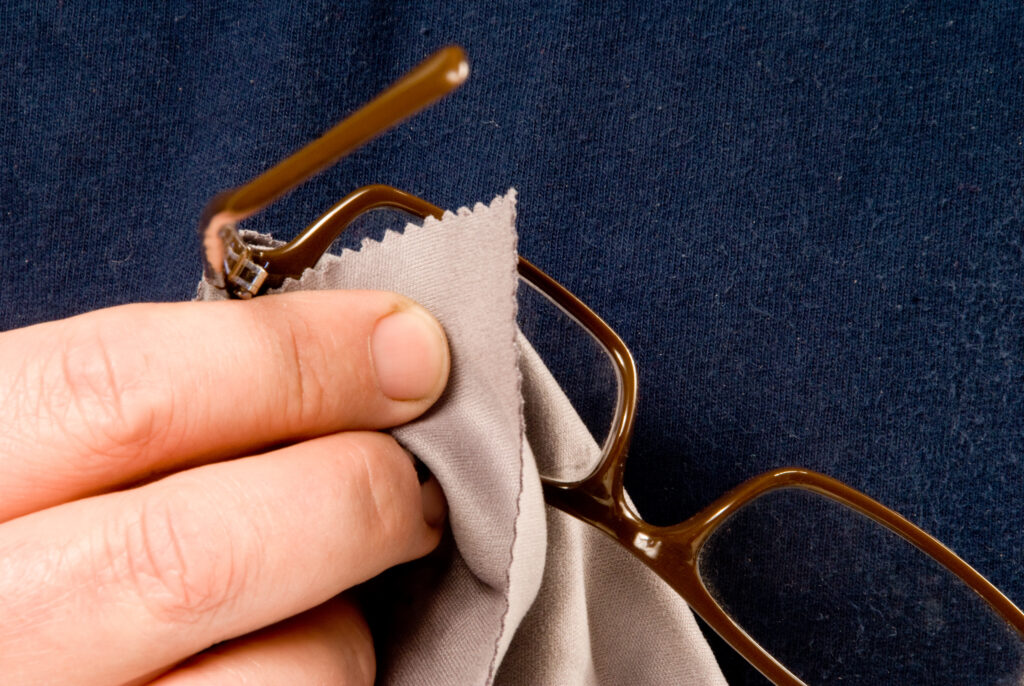
Using a clean microfiber cloth, polish the lenses in a circular motion.
Pro-Tips for “Obsessively” Clean Lenses
1. Watch the Water Temperature
Never use hot water. High heat can cause the different layers of lens coatings to expand at different rates, leading to “crazing”—a web of tiny cracks in the coating that ruins the lens. Stick to lukewarm.
2. Clean Your Microfiber Cloth
If your microfiber cloth is dirty, you’re just moving grease around. Toss your cloths in the laundry, but do not use fabric softener or dryer sheets. These products coat the fibers in wax, which will then streak your glasses.
3. Don’t Forget the Frames
Skin oils and makeup accumulate on the bridge and temples. This doesn’t just look messy; it can actually degrade the finish of acetate frames over time. Use your DIY spray on the entire frame, not just the glass!
In Summary
You don’t need to spend $15 on a tiny bottle of “designer” lens cleaner. With just a bit of dish soap and some water, you can achieve that professional, crystal-clear shine at home.
Tried our recipe? We’d love to hear how it worked for you! And remember, if your glasses are clean but still feel “off,” they might need a professional alignment. Visit one of our 17 locations and let us give your frames the VIP treatment.
 Call (602) 826-5721