Why Annual Eye Exams Are Important for Your Vision and Overall Health

Most people assume its natural for our eyesight to go as we age – and that myth can be quite dangerous.

The fact is that no one’s eyes just get “bad.” There is always a cause for blurry vision, spots, and loss of vision.

An annual checkup can help diagnose conditions before they become severe. Here are four reasons to make them a priority:

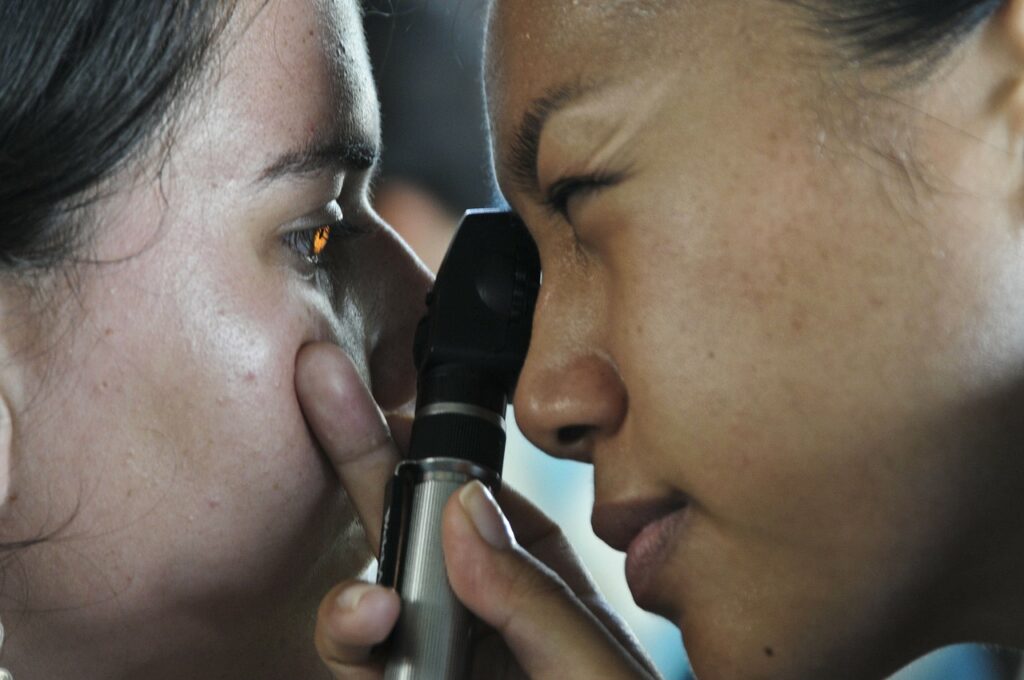
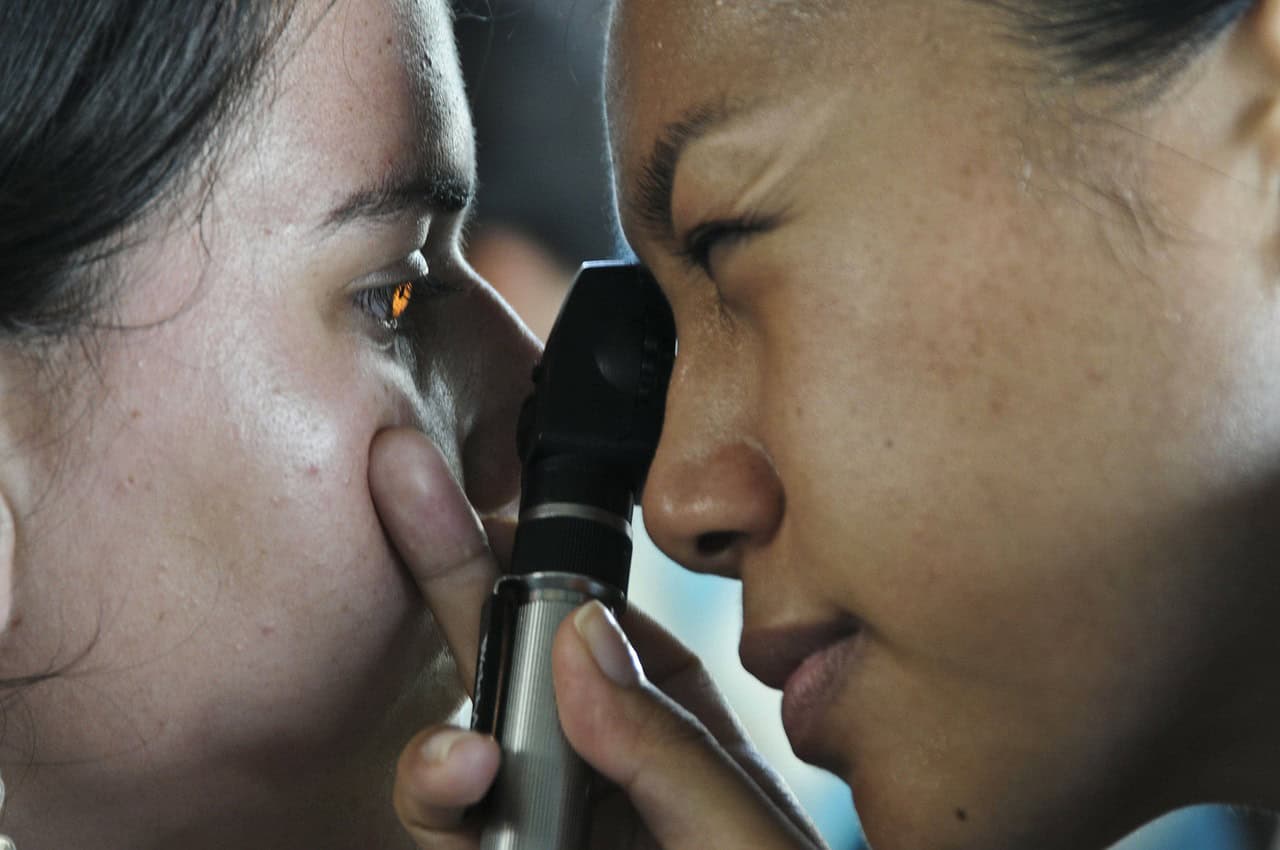
  1. Checkups reveal issues you won’t see or feel. Your eye doctor dilates your eyes which opens the pupil. This allows you eye doctor to view the inside of your eye to look for muscular degeneration, glaucoma, and melanomas. The eye doctor can see the retina, lens and optic nerve and get a full picture of eye health.
  2. Your eyes reveal your overall health. The eye allows doctors to visualize nerves and blood vessels. This lets them to see signs of hypertension, high cholesterol, and diabetes – three of the leading causes of heart disease and death in the U.S.
  3. Advances in technology help the way you see. Prescription readers and progressive lenses have seen lots of advances in recent years, making them ideal for most to improve depth perception. New materials in contacts allow them to solve more than one vision problem at a time. Anti-reflective lenses make night driving easier.
  4. It can prevent keep diabetics from going blind. AARP cited a source in an article that said 60% of those with diabetes. Diabetes causes leakage of fluid in the retina and that can cause loss of vision. Early detection can stop and even reverse vision loss. That’s why an annual dilated exam from your eye doctor is a must for diabetics.

Just as you can search for “eyeglass repair near me” to find one of our stores, you can also search “eye doctor near me” to find a qualified optometrist in your area.

Recommended Eye Exam Frequency for Children and Adults

Even though we don’t offer eye exams at All American Eyeglass Repair, we’re big supporters of eye health and regular eye examinations.

Many people aren’t aware of how often they should have their eyes examined for optimal vision and eye health.

Here’s what the experts at the American Optometric Association recommend for kids and adults:

For kids, it’s recommended that their first eye exam take place at six months of age, another exam at age three, and again at the start of school. Then, if your child is risk-free, an eye exam every other year is enough.

Please be aware that some states require children to have a current eye exam (by a licensed practitioner within the past calendar year) before a child can start school. Please check with your local school district concerning eye exam requirements.

Kids that wear eyeglasses or contact lenses should have their eyes examined more frequently. Experts recommend yearly.

Certain risk factors may dictate a different examination schedule for your child. Consult with your ophthalmologist. Some of these risk factors include:

  • Premature birth
  • Low birth weight
  • Family history of eye disease
  • Turned or crossed eyes
  • Developmental delays

For adults, the American Optometric Association recommends exams every other year for ages 18 to 60, and annual exams for adults over 60. If you wear contact lenses, it’s recommended that you have annual exams.

Again, certain risk factors exist in adults that may require more frequent examinations. Some of them are:

  • High blood pressure
  • Diabetes
  • Taking drugs that may have side effects that impact the eyes
  • Family history of eye problems or disease
  • Eye injuries or eye surgeries
  • Occupations that are demanding on the eyes, like data entry or heavy computer work

Eye care is a critical component to your overall health and well-being. Follow the proper eye examination schedule for best results.

From Smart Glasses to Eye Implants: How Technology is Transforming Vision

Technology seems to be turning quicker than we can keep pace. It isn’t just our smartphones and mobile devices that are revolutionizing the way that we live. Medical advances and technologies are allowing us to live longer, enjoy a better quality of life and granting us the ability to do things that were the subject of science fiction movies just a couple of decades ago.

Vision technology is among one of the areas that is exploding with innovative products that are not only making it more convenient to see; they are changing the way that we view things. New technologies are increasing our sight capabilities and for some, allowing individuals to see for the first time.

The options for your vision correction are endless from surgical procedures to implants, and the field continues to grow exponentially. Those who are in need of vision care, are being given options that once could only be ideation. Among the best products list are the following advances. From simplistic glasses to correct children’s vision to implants that create superhuman sight, are any of them for you?
Cameras that create independence for an aging population
The newest innovation to hit the vision industry are miniature cameras that can be mounted onto the glasses of those who are legally blind. One of the most advanced eye corrective devices to date, they can take a person who has 20/200 vision, or even worse, and give them the ability to see things that they could only once imagine. Reading print that is as tiny as something written in a newspaper, or email, the camera can literally help the blind see for the first time.

The tiny camera uses something called optical character-recognition. It is an advanced form of technology that uses artificial vision. Mounted on the outside of a pair of glasses, the device works by simply pointing it at the item you wish to read and pressing a trigger or tapping on it. There is a wire that then connects to a small pack which encases the computer and battery.

A smart device, it can recognize the text and then translate it by reading it to the user through a tiny embedded earpiece. Not limited simply to text, letter and numbers, it can be programmed to recognize things such as commercial products and even familiar faces.

Targeted specifically for those who are suffering from age-related macular degeneration, the device is bringing hope to millions who are facing impairment as they age. Curing blindness for an aging population, it could make a difference in millions of elderly people’s lives who are limited by their sight handicaps. As the technology continues to improve, there will likely be a day when the computer can be embedded. A great innovation, it is the first advance of its kind to target those who are not candidates for surgical correction.

The device is also helping those who are suffering from advanced-stage glaucoma. Altering the lives of an aging population, the new camera can be carried anywhere, giving them the independence that many have lost due to sight complications. Increasing their overall independence, it is an amazing first step to curing age-related visual disabilities.
Dry eye syndrome may be a thing of the past
Plaguing many office workers around the globe is a condition known as dry eyes. Although sounding very mundane, having perpetually dry eyes can lead to a host of conditions including vision loss. Combating the new epidemic is an eye implant that helps to produce tears that fight dry eye syndrome. Stanford University researchers have developed a way to stimulate tear production. They have created a device that has platinum foil electrodes that can be implanted into the eye with a remote control that activates tear production.

The device works specifically by stimulating the lacrimal gland, which is responsible for tear secretion through engagement of the efferent parasympathetic nerves. Quite technical, the result is that it can bring relief to millions of sufferers around the globe and in office spaces everywhere.
Simple glasses to correct children’s visual impairment?
Having a lazy eye used to require surgical correction or wearing a cumbersome patch or using special eye drops that were no less inconvenient. The XPAND company has come up with Amblyz glasses that are helping to treat amblyopia, or lazy eye, for millions of children around the world.

A company known for the development of 3D movie glasses has designed programmable glasses that are having outstanding results for lazy eye correction. Worn for just a couple of hours a day, the glasses are truly miraculous and making a huge difference in children’s vision. They are a small, but significant victory, for a condition that can cause an enormous amount of stress to parents and children alike.

The next decade is likely to see things in medical technology that can’t be dreamed. It is quite probable that in the near future blindness will no longer exist and we will all have the capacity to have superhuman vision. State of the art visual advancements are changing the way that we see things, literally, one eye condition at a time. In time, visual impairment will likely be a thing of the past.


Vision Concerns In Children

When one thinks of vision and eye health issues, one generally doesn’t think about infants or young children. Many children don’t have their first eye examination until they are about to or have already enrolled in school. While it is true that the majority of serious and chronic eye conditions come with aging, 5% of very young children experience significant vision problems, with as many of 25% of them doing so as they enter school full time.

While those may not seem like large numbers, by allowing these vision issues to go undiagnosed and untreated during important developmental years, these children run the risk of developing permanent vision problems. So caregivers should take children’s vision seriously from birth, even though things appear a bit blurry for the first few months of life . He or she will soon be seeing the world clearly enough, and deserves to get off to a good start with their vision health. Health care professionals recommend that baby has his or her first comprehensive eye exam at six months. No, baby can’t tell the doctor that the letters look more or less blurry with lens #1 or #2, but doctors can tell if those very young eyes:

  • have properly focusing near and far vision
  • are working together
  • are being moved normally
  • are being focused normally
  • have peripheral (a.k.a. corner of the eye) awareness
  • have good eye/hand coordination

Vision Concerns In Children
Children and eye care, especially with younger children, can be challenging as their ability to communicate is limited. And with limited life experiences, young children may simply assume that nothing is wrong with their vision, that their skewed “picture reception” is the way that the world is supposed to look. So since that young child isn’t aware, or can’t articulate that there’s a problem, what should you, caregiver, be keeping an eye out for?

The condition known as cross-eyed vision can make a fairly obvious impression, as the eyes very apparently are pointing in opposite directions. Indeed, they are experiencing problems with binocularity, which means that both eyes are not working together as a unit. Other problems with vision can be more subtle, so report to your child’s doctor any observations of unusual squinting, headaches, or clumsiness. Other eye related problems that require immediate medical intervention to prevent permanent vision problems or loss include:

  • persistently weeping or sensitive eyes
  • chronically bloodshot or red rimmed eyes
  • “crusty” eyes or eyes with pus visibly oozing from them
  • bulging or protruding eyeballs
  • eyeballs that roll involuntarily back into the head
  • cloud or film over eyeball
  • any injury that causes penetration of eyeball

While the majority of children will navigate growing up without serious vision issues, prudent caregivers would be wise to either purchase a health insurance plan that includes vision insurance, or add that plan to existing policies. That extra coverage can be very helpful in protecting maturing eyes.
Other Ways To Protect Children’s Vision
Like the body at large, eyes benefit from a diet rich in vitamins A,C, and E, and anti-oxidants. And addition to early and regular eye-exams and good nutrition, caregivers can try eye exercises. Sometimes known as “eye therapy”, there is some debate as to how effective these programs are in reversing or preventing the onset of some vision defects. And these exercises are inappropriate and not effective for diseases of the eye. Nonetheless, for generally healthy eyes, these exercises are harmless, although they should be done under supervision for maximum effect. Games commonly “played” with this type of therapy include visual memory exercises, and games involving rotating, tracking with, and moving the eyes. Proponents of such exercises claim they can help both near and far-sightedness, and the condition known as “lazy eye”.

And all of those digital games, reading, viewing, and texting puts a strain on eyes as well. Limiting this and having children just play offers contrasting fields of vision as well. And make your child a partner in the protection and health of his or her vision as he or she ages. Getting them started on the path to good visual health at an early age helps them to retain it for a lifetime.


Practical Advice for Selecting Durable and Comfortable Eyewear

As an adult you may have been wearing eyeglasses for a number of years and have come to understand what styles and brands suit you best. For a child, they will have their own views on the subject, but your experience will help guide them towards the correct choices, even more so if they are choosing their first pair. Here are six tips to assist the selection process.

1 Practical beats cute

Although you may have selected their bedroom design based upon a Disney character, eyeglasses for children must first be practical and suitable for the task. Being cute, trendy or stylish are secondary attractions, but may be first choice for your child.

Careful explanation to your child will reveal the reasons for your choices. By explaining the difficulties of choosing inappropriate eyeglasses, you will help your children understand why certain models are being suggested. Even the youngest of children will understand common sense rules and know that you are not turning down the Barbie specials purely because your bedroom is Barbie everything.

Unbreakable frames will top everyone’s list for kids.

2 Discuss everyday routines

Just as you eat breakfast, lunch and dinner and wear specific clothes for school and more glamorous choices for birthday parties, children have to understand that wearing glasses will become a major part of their everyday routine.

Together, the children and the parents can practice cleaning the frames and the lenses as well as learning the best way to put glasses on and take them off. Understanding how glasses must be kept safe in case when they are not wearing them is more important than the color of the frames.

3 The fit is important

For a child to virtually forget that they are wearing eyeglasses the best fit is extremely important and for this you will also be guided by the eyeglass fitting specialists. The frames will sit lower than a child’s eyebrow line, while the lowest edge of the frame will not be seen below your child’s cheeks.

Narrow frames make your children’s eyes look too close together, but wide frames should not exceed the distance of your child’s face at the temples.

4 Color match helps

Your eyeglass professional will understand the correlation between eye color and frame color as some match perfectly and others never will.

5 Where are your eyes?

To prevent bullying, children with close set eyes will probably choose a thin or clear bridge, whereas highly colored bridges make wide set eyes appear much closer together.

6 Activity considerations

Generally, children are far more active than adults and will require frames that are less likely to break easily. Depending upon the child’s favorite sports, they may need to wear the eyeglasses while performing those sports, where it is safe to perform the activity wearing eyeglasses.

By combining all of these six simple tips, a match between the adult and the child’s point of view will help select effective eyeglasses. Their input is important at all ages to extend their co-operation with wearing the eyeglasses consistently. You must remember that prescriptions for your child’s eyes must be regularly updated and this may incur a change of frames and a review of.

Why Protective Sports Eyewear Is Essential for Athletes of All Ages

Nowadays, parent, players and coaches recognize the harmful injuries that can happen when protective eyewear for sports is not worn in the field. Wearing professional eyewear in sports helps players with their vision while reducing eye injury.
What sports require protective eyewear?
When it comes to eye injuries, most of the trauma happens when an individual is playing a high-risk sport. So, what exactly is a high-risk sport?

Low risk sports are classified as sports that are played without using an object like a stick, puck, ball, racquet or bat. They also usually have no body contact – some examples of a low risk sport include: gymnastics, swimming, track and cycling.

Sports that involve high risk are basketball, hockey, football, baseball, tennis, racquetball, water polo and lacrosse. As you can see, protective eyewear is necessary since all these sports involve body contact. They also use a ball, bat, stick, racquet or puck. At the other end of the spectrum, you have boxing, martial arts, and wrestling and a lot of body contact.

When playing sports, if you’re wondering whether you should wear protective eyewear, you have your answer. Consider if the sport involves the use of an object that can injure your eyes.
Why can’t I just wear my regular glasses?
Think about having a car that only has a regular plastic bag. That plastic bag won’t come into question until an accident happened. In the meantime, you’ll be okay having it in your car. Protective eyewear works in the same way. You may think you can wear your standard eyeglasses until you get into a high impact situation that places your eyes at risk. Normal glasses look like they’re working until you actually need them to work!

Regular glasses have not been created with material that can absorb the impact many sports have. Companies like Liberty Eyewear offer sports eyewear called Rec Specs. Such eyewear is created with certified protection meant for indoor or outdoor play.

You may still be wondering if you really need eyewear that can protect your eyes while playing sports. Imagine a ball flying at high speed in the wrong direction. We can already predict what could happen to the unsuspecting racquetball player. Flying objects may be obvious, but there’s another danger when playing sports. The unseen often happens when someone is poked in the eye, jabbed, elbowed or body checked. Eye injuries can all happen within close body contact.
Looking for the Right Protective Sports Eyewear
Looking for eyewear that offers adequate protection in sports involves a search for various features. So, what exactly are you looking for when you want top-notch eye protection? Here are some features to look for.
Size
There are so many sizes and a lot of shapes and it can be overwhelming to sift through and find a perfect fit. Whether you’re a racquetball player, a basketball player, soccer player or hockey player, there is no reason you can’t find eyewear to protect your eyes.   For those sports players who need a helmet can find goggles designed to accommodate a helmet.
The lens
Your standard, daily, lenses are made from a different lens material than a protective eyewear lens. Polycarbonate is the material that makes a lens resist high impact from flying objects. If you’re playing outdoors, you also get the benefit of having UV protection from polycarbonate.

Prescription needs
If you have a prescription that is either mild or moderate, wearing eyewear in sports helps enhance your performance by giving you that sharp vision that you need to play the game.
Coating
Scratch-resistant coating is also added to both the back and front of the polycarbonate lens – this feature is created to avoid scratches. You will the anti-scratch add on in almost all the sports eyewear.
The Frame
If you’re playing different sports, you need different types of frames for your particular sport. When sports frames are designed, they are created with the different scenarios that could happen in the sport. These frames can work with someone who needs to have a prescription or someone who just needs a plain lens. They differ from standard frames in the way that they resist high impact. This high impact resistance is achieved by constructing them with a special plastic or polycarbonate. A special padding is added to protect your nose when you’re in a high impact situation.

If you’re in a sport like biking or sailing, you can benefit from a wrap around frame. It all depends on the sports you like to play. Find a suitable frame that adapts to your sport. In addition, wrap styles are beneficial for dusty or windy situations.
Kids and Protective Eyewear
Did you know that eye injuries are the leading cause of blindness in children? Help prevent this by protecting your child with the right eyewear. With children, sports goggles need to accommodate their growth and their sports-specific needs. A parent may buy a sweater for their child with the hope that there is “room to grow”, but sports goggles are supposed to be made to fit. An increase in eye injury happens when the frames are not the right fit.

Kids should be able to wear a pair that is flexible and easy to adjust. In addition, the frames should not be too large or too small – if too large, peripheral vision is obstructed and a flying object from either side can hit a child. The frame should be comfortable because kids often resist anything that is uncomfortable to wear. Lastly, parents should change their children’s goggles as they outgrow them.

Your eyes are important. Protect them with the right eyewear so you can avoid any eye injuries. You can help reduce eye trauma by understanding the type of eyewear necessary for the particular sport that you play. Remember, standard lenses are not created to absorb high impact. We take precautions in protecting our heads from concussions and our bones from breaking. You can take the same precaution to avoid a scratch in your cornea or an eye injury that can take away your vision.

Can you think of the number of ways in which we exert our eyes every single day? Watching TV, working on computers, texting on our mobile phones and working on our laptops or tablets all require us to tax our eyes nonstop. Not many of us realize that by overexerting our eyes, we not only weaken their strength, but also end up compromising our vision.

Exercises For Tired EyesBeing vital organs and our windows to the outside world, eyes need to be taken care of in the best way possible. One way of doing that is to use American Eyeglass Repair for any major or minor repairs needed on your eye-wear. Combine that with some effective eye exercises and you can ensure your eyes’ wellness.

Ten Eye Exercises to Perform Daily

If you are wondering how to exercise eyes, here are 10 ways you can accomplish the task easily and in no time:

1. Blinking – This is perhaps the easiest and most natural form of eye exercise because, much like breathing, your body inherently does it every couple of second. We may often ignore the urge to blink while working on computers or watching TV, which can dry our eyes out and make them feel irritable. Make it a point to blink every four seconds, no matter how busy you get during the day.

2. Open and shut – This exercise is somewhat similar to blinking, except that it requires you to close your eyes for a relatively long time. Shut your eyes tightly for three to five seconds, and then open them for the same length of time. Continue this exercise for up to eight times.

3. Massaging eyelids – This simple exercise not only helps relax your eye muscles, but also improves their blood circulation. Close your eyes for a couple of minutes and lightly massage them in circles. Before you start the massage, however, do make sure that your fingers are completely clean.

4. Eye roll – Usually an eye roll signifies skepticism, but not in the case of this exercise. First roll your eyes in the clockwise direction, and then roll them back counterclockwise. Blink as you complete one clockwise-counterclockwise set. Complete five sets.

Eye Rolling Exercise5. Follow the infinity symbol – You can also call this one a “horizontal” eight exercise. Draw the infinity symbol big enough for you to easily see from a distance of 10 feet, and then hang it at a point 10 feet away from you. Now sit in a relaxed position and make your eyes slowly roll so as to trace the horizontal eight. Do once from both directions.

6. Close and distant focusing – This exercise helps stretch your eye muscles. Concentrate your eyes on a far-off object (approximately 50 feet away) for 10-15 seconds, and then shift your gaze to a nearby object (30 feet or less away). Repeat this process five times.

7. The pencil exercise – Hold a pencil in your hand and stretch your arm as far out as you can. Focus your eyes on the pencil and then slowly start moving your arm inward, bringing the pencil closer to your eyes. Keep following the pencil with your gaze till it becomes out of focus. Continue for up to 10 times.

8. Cover your eyes – This exercise is all about knowing how to rest your eyes. Place your palms loosely on your eyes, allowing enough room to blink without trouble. Even a few minutes of this exercise will help your eyes relax.

9. Light pressure approach – Close your eyes and apply light pressure on your eyelids with three fingers of each of your hands. Make sure you do not press lightly. Do this five times, taking a couple of seconds each time.

10. Do the clockwork – Sit in front of a wall clock, concentrating on the center first. Then, look at any number on the clock without turning your head at all. Bring your gaze back to the center and repeat till you have done all 12 hour marks.

Blog Overview:

Shin guards and helmets are only half the battle. Discover why specialized sports eyewear like Rec-Specs is the most important investment you can make for your child’s athletic career.

Protecting Your Young Athlete: A Guide to High-Impact Sports Eyewear

In the United States, youth sports are a rite of passage. In warmer regions, sports like baseball, soccer, and lacrosse are played year-round. While parents are quick to buy the best helmets, shin guards, and cleats, one of the most vulnerable parts of a child’s body is often left unprotected: their eyes.

Did you know that sports are the leading cause of eye injuries in children? According to the American Academy of Ophthalmology, a significant majority of eye injuries for kids aged 11–14 occur during athletic activities. 

Why “Regular” Glasses Aren’t Enough

Many parents believe that their child’s everyday prescription glasses provide enough protection. In reality, wearing standard glasses during sports can actually be more dangerous than wearing no glasses at all. Standard fashion frames are not designed to withstand the impact of a “bad hop” ground ball or a stray elbow. If they shatter, the broken plastic or glass can cause devastating secondary injuries to the eye. True protective eyewear is made from polycarbonate, a shatter-proof material that can withstand high-velocity impact.

Top Brands for Youth Sports Protection

Fortunately, protective gear has evolved. Your child doesn’t have to sacrifice style or comfort to stay safe.

  • Liberty Eyewear (Rec-Specs) 

This is the industry gold standard. Rec-Specs are specifically engineered to meet or exceed ASTM F803 safety standards for high-impact sports. They feature wrap-around designs and padding to cushion the face upon impact.

  • Oakley Youth

Known for their “Unobtainium” grip and “O-Matter” frame material, Oakley eyeglasses offers durable, lightweight frames that stay secure during heavy movement, making them a favorite for soccer and track athletes.

  • Ray-Ban Junior

For non-contact outdoor sports like golf or tennis, Ray-Ban Junior offers high-quality UV protection in styles that kids actually want to wear.

What to Look for in Sports Eyewear

When choosing a pair for your son or daughter, look for these three essentials:

  1. Shatterproof Lenses – Always insist on polycarbonate lenses.
  2. Secure Fit – Look for frames with an elastic strap or curved temples to ensure the glasses don’t fly off mid-play.
  3. Venting – To prevent the “fogging” issue we discussed previously, many sports frames include side vents to keep air flowing during high-intensity games.

How All American Eyeglass Repair Supports Your Athlete

At All American Eyeglass Repair, we see the aftermath of sports mishaps every day. We are always relieved when a child walks in with a broken frame but uninjured eyes because they were wearing proper protection.

We can help by:

  1. Precision Adjustments – Ensuring your child’s sports goggles fit snugly so they don’t distract from the game.
  2. Fast Repairs – If a hinge snaps or a strap breaks, we can often fix it on the spot so your athlete doesn’t miss the next big game.
  3. Lens Replacement – If those polycarbonate lenses get scratched up from the dirt and turf, we can swap them out for a fresh, clear pair.

In Summary

Investing in quality sports eyewear is an investment in your child’s future. A “shock to the system” from a broken frame is a small price to pay compared to a permanent eye injury. Make sure your young athlete is fully equipped before they step onto the field.

Is your child’s gear ready for the season? Visit one of our 17 locations for a professional fitting or repair today!

Why Regular Eye Exams Are Important for Your Child’s Vision

Most adults who were glasses go in to see their Doctor each year or two for an annual exam, making sure there are no changes in their prescription. You read use the computer drive and put strain on your eyes in many ways, but what about our children. Our young ones are growing and active and since they may not communicate with you problems they may or may not be experiencing it is up to us as parents to not only look for warning signs but to be proactive and have their eyes checked on a regular basis.

Children should have their first comprehensive eye exam at six months old, according the American Optometric Association, again at three years old and one more time prior to entering kindergarten, after that an exam every two years is recommended.

Our children are around social media devices, cell phones and video games which require the use of the eyes in a more strenuous way than decades ago, take the time and make sure you help catch any potential problems before they occur.