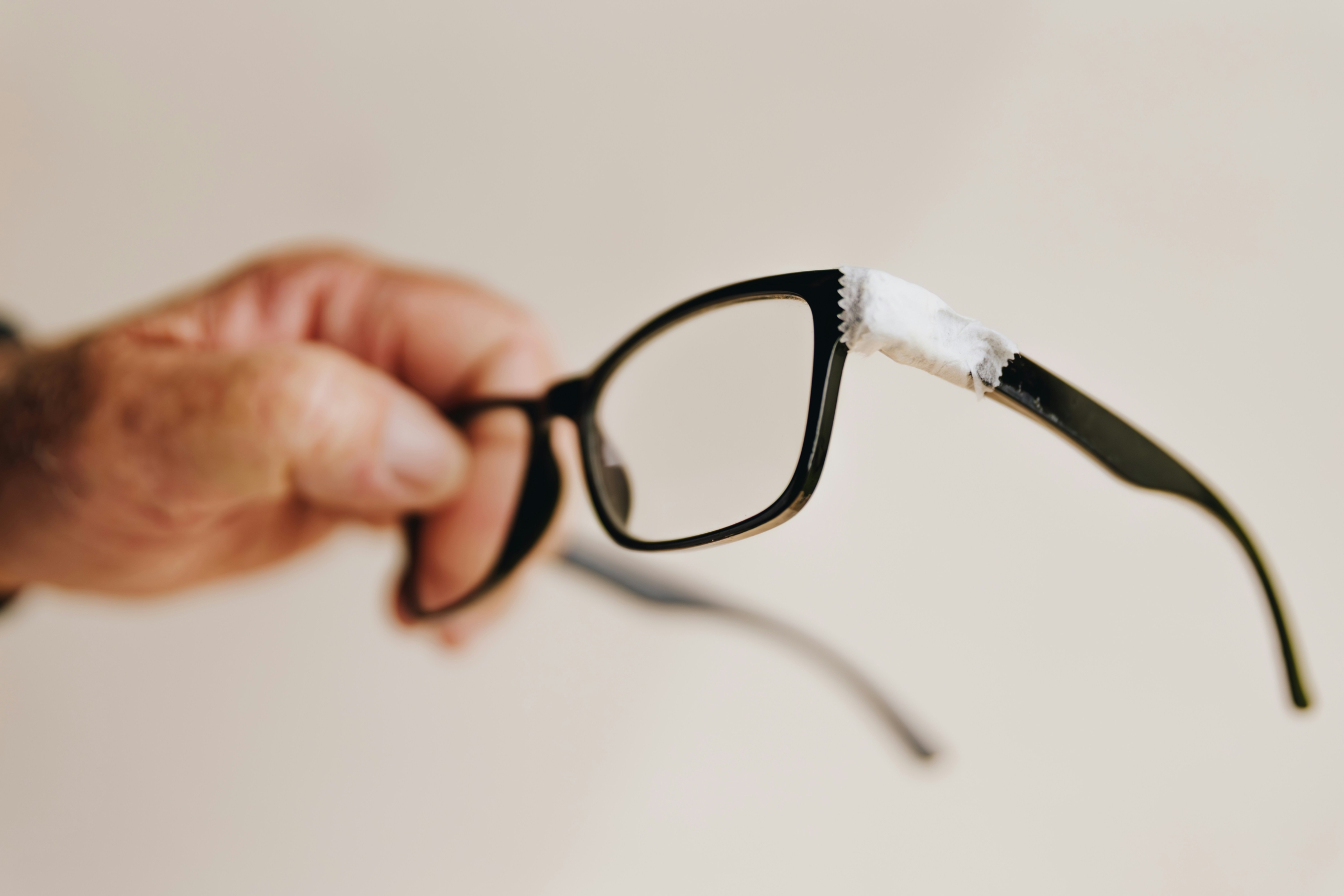
Hand holding black eyeglasses with white tape wrapped around the upper frame corner, showing a temporary fix for a broken glasses frame.

Many everyday glasses problems can be stabilised at home with the right approach. Loose screws, slight bends, or minor misalignment often respond well to careful adjustment.

At the same time, not every repair is suitable for DIY. Some fixes may seem simple but can weaken the frame or cause long term damage. According to the Vision Council, over 166 million Americans wear prescription eyewear, which means small repairs are a common need. Handling them correctly makes a real difference in how long your glasses last.

This guide helps you fix what is safe and recognise when to step back and choose a professional repair.

A Practical Guide to Fixing Glasses Frames at Home
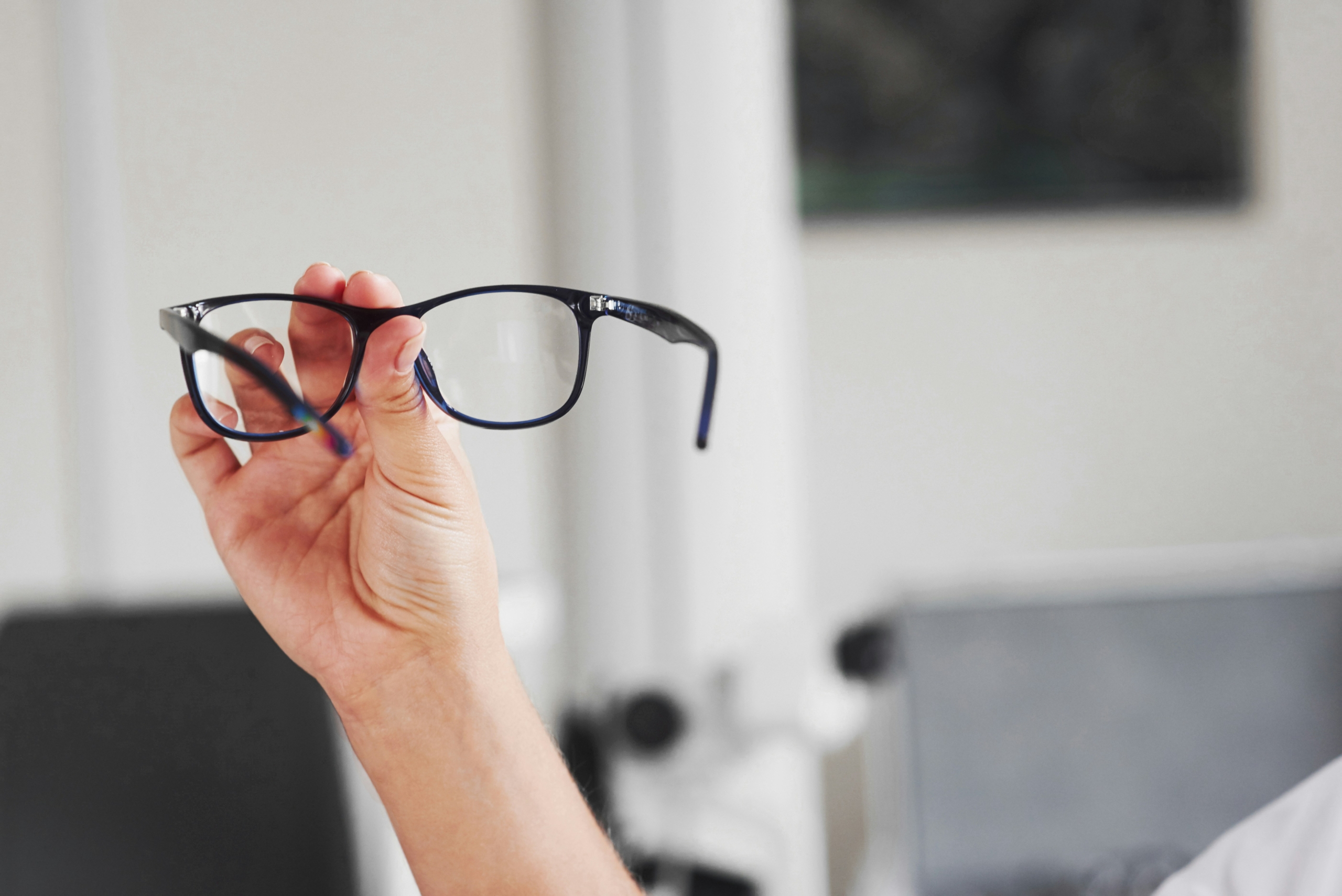
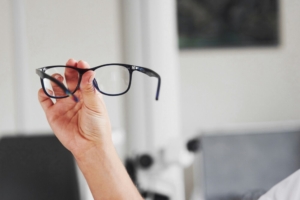
Hand holding black eyeglasses for inspection in a clean indoor setting, representing professional frame assessment and repair.

Tightening Loose Screws

Loose screws are one of the most common issues. They usually affect the hinges where the arms connect to the frame.

A small eyeglass screwdriver from a repair kit is the safest tool. Tighten gently and stop as soon as resistance increases. Over tightening can strip the screw or damage the hinge.

If a screw is missing, a temporary solution is to use a toothpick or thin wire to hold the hinge in place. This should only be used short term until a proper replacement is installed.

Fixing Slightly Bent Glasses Frames

Frames can become slightly bent after being sat on or dropped. The repair method depends on the material.

For plastic frames, warm water can help. Place the frame in warm, not hot, water for about 30 seconds. This softens the material, making it easier to adjust. Gently bend it back into shape using slow, controlled movements.

For metal frames, use your hands to make small adjustments. Apply light pressure and avoid repeated bending, which can weaken the metal over time.

Adjusting a Loose or Crooked Arm

If one arm sits higher than the other, your glasses may feel uneven.

Place your glasses on a flat surface and check which side is misaligned. Gently bend the arm at the hinge until both sides sit evenly. Small adjustments are key here. Large movements can cause stress on the hinge.

How to Fix Common Glasses Problems at Home
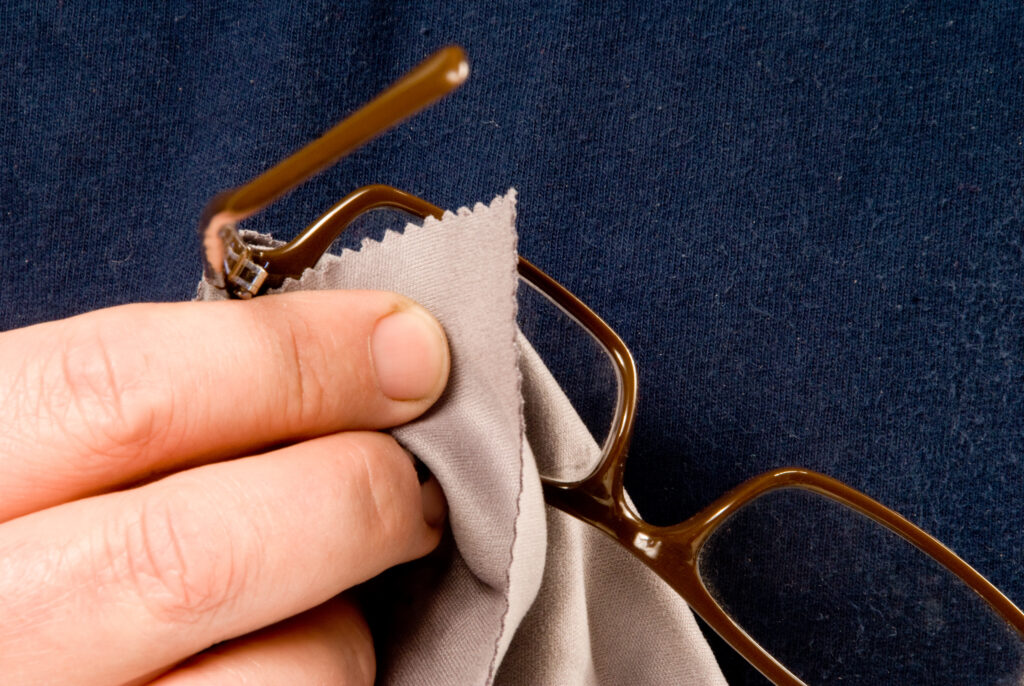
eyeglass being fixed

How to Fix Broken Glasses at Home (Temporary Fixes Only)

A broken frame can sometimes be held together temporarily using tape or adhesive. Clear tape works best for short term use, as it keeps the pieces aligned without adding too much bulk.

Adhesives such as super glue may seem like a good option, but they come with risks. Glue can seep into hinges or lenses, causing further damage. It also creates a rigid bond that may fail under pressure.

These fixes are only meant to get you through a short period. They are not reliable long term solutions, and in many cases mail-in eyeglass repair is the safer next step. 

Fixing a Glasses Hinge at Home

If the hinge is loose, tightening the screw is usually enough. However, if the hinge itself is damaged or bent, the repair becomes more complicated.

Trying to reshape a damaged hinge can make it worse. Hinges are small, precise components, and any misalignment affects how the glasses open and close.

Once the hinge shows signs of wear or damage, it is better to explore eyeglass temple and hinge repair rather than risk breaking it completely. 

Repairing a Bent Glasses Arm

A bent arm can make your glasses uncomfortable and unstable.

Start by identifying where the bend has occurred. Hold the frame firmly and apply gentle pressure to straighten the arm. Move slowly and check alignment after each adjustment.

Watch for signs of metal fatigue such as creaking or resistance. If the arm feels weak, stop immediately. Continuing can cause it to snap.

Repairs You Should Not Attempt at Home

Broken Bridge or Snapped Frame

The bridge is the central part of the frame that rests on your nose. If it snaps, the structural integrity of the glasses is compromised.

Adhesives rarely hold under the constant pressure placed on this area. Even if the repair looks secure, it is likely to fail during normal use.

At that point, broken eyeglass nose bridge repair is a far better option than another temporary DIY fix. 

Damaged Hinges or Missing Parts

Missing screws, broken hinges, or detached components require replacement parts. These parts are often small and specific to the frame design.

Without the correct tools and components, DIY repairs can cause further misalignment or damage.

High Value or Designer Frames

If your glasses are expensive or hold sentimental value, attempting a home repair can be risky.

A small mistake can turn a repairable issue into a permanent problem. In these cases, it makes more sense to choose designer eyewear repair or mail-in eyeglass repair for convenience and expert handling. 

Tools You Can Use for Simple Repairs

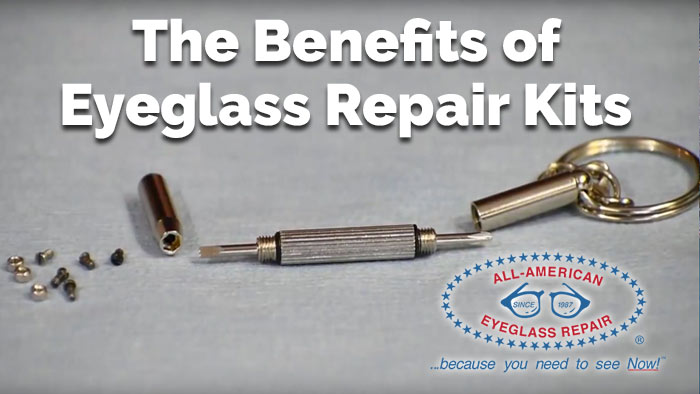
Basic Eyeglass Repair Kits

A standard repair kit includes small screwdrivers, replacement screws, and nose pads. These kits are inexpensive and widely available.

They are ideal for basic maintenance tasks such as tightening screws or replacing worn components.

Household Alternatives

If you do not have a repair kit, some household items can help in a pinch.

Toothpicks can act as temporary hinge pins. Clear tape can hold a frame together briefly. Small pliers can assist with gentle adjustments, but they should be used with care to avoid scratching or bending the frame too much.

These alternatives are best used for temporary fixes only.

When to Stop DIY and Choose Professional Repair

Smiling customer trying on eyeglasses in an optical repair setting, reflecting restored fit, comfort and everyday wear after professional frame repair.

There is a clear point where DIY repairs stop being practical. If the issue involves structural damage, missing parts, or repeated failure of a temporary fix, it is time to consider professional help.

For a full understanding of all repair options, including advanced fixes and part replacements, refer to this complete glasses frame repair guide for all repair options.

Professional services can restore alignment, replace components, and extend the life of your glasses. This is especially important for prescription lenses, where accuracy directly affects your vision.

The American Academy of Ophthalmology highlights that improperly fitted or damaged glasses can lead to eye strain and headaches. You can read more about eyewear safety on their official site: https://www.aao.org.

If your glasses are still wearable but not quite right, you can find a repair location or explore mail-in eyeglass repair before the damage gets worse. 

Fix What You Can, Protect What Matters

Learning how to repair glasses frames at home can save money and reduce inconvenience. Simple fixes like tightening screws or adjusting alignment are safe when done carefully.

However, knowing your limits is just as important. Structural damage, broken hinges, and valuable frames require proper tools and experience.

If your glasses matter to your daily life, choosing a reliable repair option is the best way to protect them. If you are ready to move beyond temporary fixes, you can find a repair location or use mail-in eyeglass repair

FAQs About Repairing Glasses Frames at Home

Can I use super glue to fix glasses frames?

Super glue can work as a short term fix, but it is not recommended for long term use. It can damage the frame or lenses and may fail under pressure.

How long do DIY glasses repairs last?

Most DIY repairs are temporary. They can last from a few days to a few weeks, depending on the damage and how often the glasses are used.

Can bent glasses be fully restored at home?

Slight bends can often be corrected at home. Severe bending or repeated adjustments can weaken the frame, making full restoration unlikely without professional help.

What is the safest temporary fix for broken frames?

Clear tape is usually the safest option for holding broken parts together temporarily. It keeps alignment without introducing chemicals or rigidity.

Is it worth repairing cheap glasses?

For low cost frames, replacement may be more practical. However, if the damage is minor, a quick repair can extend their use without extra expense.

How do I know if my glasses need professional repair?

If the frame is snapped, the hinge is damaged, or the glasses no longer sit correctly after adjustments, it is time to seek professional repair.
Blog Overview:

Learn how to fix your specs with our glasses frame repair guide. Discover DIY solutions, common issues, and when you should call a professional.


A damaged frame does not always mean the end of your glasses. A loose screw, a slightly bent arm, or a fit problem around the ears can often be corrected at home. More serious issues, such as a broken hinge, a snapped bridge, or a frame that no longer holds the lenses firmly, need more than a small screwdriver.

That distinction matters because eyewear is not only about comfort. The FDA guidance on impact resistant lenses says impact resistant lenses are an essential part of safe eyewear design. The American Academy of Ophthalmology notes that polycarbonate lenses resist shattering. If damage affects how your lenses sit in the frame, stop wearing the glasses until the problem is checked.

Repair is often worth exploring before replacement. The Vision Council reported in Q2 2025 that 82% of respondents use some form of vision correction. If you depend on your glasses every day, a practical repair can save money and preserve a frame that already fits well.

What to Do First When  Your Glasses Frame Breaks

Hand holding black eyeglasses for inspection in a clean indoor setting, representing professional eyeglass frame assessment and repair.

Check whether the damage is cosmetic or structural

Look at the frame under bright light. A pair that only sits crooked may need a small adjustment. A split hinge, a crack near the bridge, a loose lens groove, or a broken temple connection points to structural damage.

Stop wearing frames that feel unstable

If one arm swings freely or a lens feels loose, take the glasses off. Wearing unstable frames can turn a small issue into a bigger repair, especially around the hinge and bridge.

Gather the right tools before attempting a fix

For safe at home glasses frame repair, keep the tool list simple. A micro screwdriver, a clean cloth, a soft surface, and a basic repair kit are enough for small jobs. Skip household pliers and strong glue.

Common Glasses Frame Problems You May Be Able to Fix at Home

Loose screws and wobbly arms

If the hinge screw has backed out and the arm still lines up correctly, tightening it may be all you need. If the screw will not hold, the hinge may be worn or bent, which pushes the job out of DIY territory.

Slightly bent temples

A temple arm that has drifted outward can make glasses feel loose or uneven. A very small correction may be possible at home, especially on metal frames, if the bend is gentle and nowhere near the hinge.

Minor fit issues around the nose or ears

A lot of people search for a bent eyeglass frame fix when the problem is really fit. Nose pads shift. Temple tips spread. One side presses harder than the other. If the frame is only uncomfortable, not broken, a light adjustment may solve it.

This is where professional eyeglass repair services can help you avoid common mistakes when the issue turns out to be more than a simple adjustment. 

Frames sitting crooked on the face

Set the glasses on a flat surface and check whether both temple tips touch evenly. A small difference can sometimes be corrected. A large difference often points to impact damage and should be handled more carefully.

Safe At Home Fixes for Glasses Frames

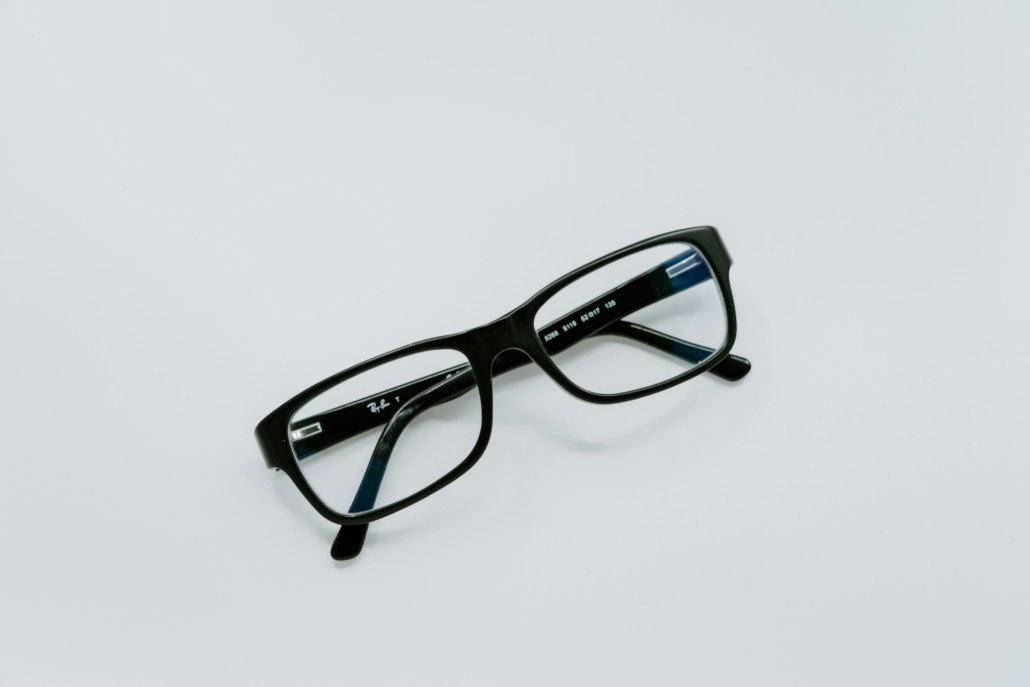
ray ban glasses

How to tighten a loose screw properly

Set the glasses on a towel so they do not slide. Hold the hinge steady, then tighten the screw only until it is snug. Do not keep turning once resistance increases.

If the original screw is missing, use a spare only if it fits cleanly. If it resists, stop.

How to gently adjust bent arms

For a mild bend in a metal temple, make very small adjustments and check the fit each time. Move the arm a little, try the glasses on, then reassess. The goal is balance, not a dramatic correction.

Plastic frames are less forgiving. Heat can warp the finish or alter lens fit, so be cautious. If you are unsure what the frame is made from, this guide to eyeglass frame materials can help. 

Using a glasses repair kit without damaging the frame

A repair kit is useful for screws, nose pads, and tiny comfort fixes. It is not a full solution for broken glasses frames. If the repair needs pressure, glue, filing, or improvised parts, the kit has already stopped being the right tool.

This is also why mail-in eyeglass repair is often the better path once the fix moves beyond a simple adjustment. 

Temporary ways to improve comfort and fit

If the frame is intact and only feels awkward, you may get short term relief by tightening a loose screw, replacing a nose pad, or making a slight temple adjustment. Once the frame feels unstable or the lenses no longer sit securely, comfort is no longer the main issue.

Glasses Repairs You Should Not Try Yourself

three piece drill mount eyeglasses

Broken hinges

Broken hinge repair for glasses is rarely a true DIY job. Hinges carry stress every time you open and close the arms. Once the hinge barrel snaps or loosens from the frame, a lasting repair often needs welding, replacement, or rebuild work.

American Eyeglass Repair highlights hinge and temple problems among the common eyeglass repairs they handle. If that is the issue, eyeglass hinge and temple repair is the most relevant next step. 

Snapped bridges

A bridge break is one of the clearest signs that home repair is the wrong path. The bridge holds the frame shape and lens alignment. If it is snapped, glued, or tied together, the glasses may sit wrong on your face.

For that type of damage, broken eyeglass nose bridge repair is a far better option than a temporary fix. 

Cracked plastic frames

Cracked glasses frame repair for plastic frames is tricky because the material can fail beyond the visible crack line. Glue may hold for a short time, but it often leaves residue and makes later repair harder.

Frames that no longer hold the lenses securely

If the lens pops out, rattles, or shifts in the groove, do not wear the glasses until the frame is checked. The frame is no longer supporting the lens as intended.

Why glue can make repair harder

Super glue can seep into hinge joints, frost the frame surface, damage finishes, and create a brittle repair line that fails again under normal use.

Repair Advice by Frame Material

Plastic frame repair

Plastic glasses frame repair depends a lot on the exact material. Some plastics allow light reshaping. Others crack with very little warning. Surface cracks near the hinge and bridge are especially risky.

American Eyeglass Repair has related material guidance in its article on common eyeglass frame materials

Metal frame repair

Metal glasses frame repair is often more forgiving for gentle straightening, but a twisted bridge, broken hinge mount, or cracked solder point still needs professional work. Metal frames also scratch easily if you use the wrong tool.

Titanium frame repair

Titanium glasses repair sits in its own category. Titanium is light and strong, but it needs specialist equipment for a lasting structural repair. That is why a dedicated titanium frame repair service matters for broken bridges, snapped hinges, and weld work. 

Why material type changes the repair method

Material affects heat tolerance, flexibility, finish, and which tools a technician can use. A home fix that works on thin metal may split acetate. The best first question is not “Can I fix this?” but “What is this frame made from, and what failed?”

Repair or Replace: How to Decide

When repair is the better choice

Repair often wins when the damage is local and the rest of the frame is in good shape. It also makes sense when your lenses are still current, your frame fits well, or the model is hard to replace.

When replacement makes more sense

Replacement may be the cleaner option if the frame is badly worn, the plastic has become brittle, the lenses also need replacing, or the repair cost is too close to the price of a new pair.

Cost, sentimental value, and frame quality

American Eyeglass Repair states on its eyeglass repair services page that most repairs cost between $40 and $80, with exact pricing confirmed before work begins. For a quality frame, that can be far better than starting over.

Why discontinued frames are often worth repairing

Once a model is gone, replacement can mean hunting resale sites or paying for new lenses and a new frame together. In that situation, a careful repair often makes more sense. This guide on repair or replace broken glasses can help readers think through that decision. 

When Professional Glasses Frame Repair Is the Best Option

Customer handing eyeglasses to an optical repair specialist at a service desk, representing professional eyeglass repair consultation and frame assessment.

Signs the damage needs specialist tools

Look for cracked hinge mounts, broken bridge joints, stripped screws that keep failing, lens retention problems, or damage on titanium and rimless frames. Those signs point toward a professional eyeglass repair service

What a professional repair service can fix

A specialist can often deal with hinge rebuilds, bridge repairs, temple replacements, laser welds, frame reshaping, nose pad work, and alignment issues that go far beyond a home kit. American Eyeglass Repair also notes that most mail in repairs are completed the same business day the frames arrive.

When mail in repair is the easiest route

Mail-in eyeglass repair makes sense if you do not live near a shop, your frame needs specialist work, or you own a high value pair that you would rather not hand to a general repair counter. 

How Mail In Glasses Frame Repair Works

When mailing your frames is a smart option

Mailing your glasses is a smart option when the break is beyond a safe home fix, the frame is expensive, or your local choices are limited.

What to expect from the process

With American Eyeglass Repair, the natural next step is a mail-in eyeglass repair option for broken frames. You send the glasses in, receive a quote, approve the repair if you want to proceed, and then wait for the repaired frame to come back. 

How to pack frames safely for shipping

Wrap the glasses in soft tissue or bubble wrap. Place them in a hard case if you have one, then pack that case inside a sturdy outer box. Add a note with your contact details and the issue you want checked.

If a reader would rather not ship their frames, they can also find a repair location.

Answers to Common Questions About Glasses Frame Repair

Q: Can broken glasses frames really be repaired?

Yes, many can. Loose screws, bent temples, hinge work, bridge repairs, and some material specific problems are repairable.

Q: Can I use super glue on my glasses?

You can, but it is rarely a good idea. Glue often creates residue, weak joins, and extra work for the technician who later has to clean up the failed repair.

Q: How much does glasses frame repair usually cost?

For American Eyeglass Repair, most repairs are listed at $40 to $80, with exact pricing confirmed before work starts.

Q: Can bent metal frames be straightened?

Yes, slight bends often can. The risk goes up if the bend is sharp, close to a hinge, or part of a wider twist across the front of the frame.

Q: Is mail in eyeglass repair worth it?

It often is, especially for specialist repairs, premium frames, or people who do not have a trusted local option.

Q: Are plastic frames harder to repair than metal ones?

They can be. Plastic can crack or deform in ways that are hard to reverse cleanly. Metal can also fail, but some metal alignment problems are easier to correct without leaving visible damage.

Get Your Glasses Back Into Good Shape

Some glasses frame repair jobs are safe at home. Others need skill, alignment tools, and the right materials knowledge. The trick is knowing which is which before a simple problem turns into a bigger one.

If your frame damage looks structural, the lenses feel loose, or you would rather get a proper answer before trying a fix, visit the American Eyeglass Repair contact page or request a mail-in repair quote

Simple Fixes to Stop Metal and Plastic Frames from Sliding Down Your Nose

If your eyeglasses keep sliding down your nose, the most common causes are loose hinge screws, worn nose pads, improper frame fit, or bent temple arms. You can often fix slipping glasses by tightening screws, adjusting the temples, or replacing nose pads. When adjustments don’t solve the problem, professional frame realignment or component repair may be necessary.

Glasses that constantly slip aren’t just annoying — they can affect vision clarity, comfort, and even damage your frames over time. Below is a complete guide to understanding why glasses slide down and how to fix them safely.


Why Do My Glasses Keep Sliding Down?

Eyeglasses are designed to sit securely and comfortably without constant adjustment. When they begin slipping, something in the fit or structure has changed.

Loose Hinge Screws

Over time, the tiny screws at the hinges loosen from normal wear. Even slight looseness can cause the temples to widen, allowing the frame to slide forward.

If your glasses feel unstable when you open and close the arms, tightening the screws may immediately improve the fit. 

Worn or Flattened Nose Pads

Nose pads naturally wear down. Silicone pads can harden, flatten, or become slick with oils from your skin. When this happens, they lose grip and no longer support the frame properly.

Replacing nose pads is one of the most effective ways to stop glasses from slipping.

Frames That Are Too Wide for Your Face

If your glasses have always slipped, the frame width or bridge size may not match your facial structure. Frames that are too wide cannot anchor properly and will gradually slide down.

Professional frame adjustment can often improve fit — even if the glasses were originally sized incorrectly.

Bent or Misaligned Temple Arms

Temple arms should gently curve behind your ears to secure the frame. If they are bent outward or flattened, they won’t hold your glasses in place.

Minor adjustments can help, but aggressive bending can damage metal, plastic, or titanium frames.

Heavy Prescription Lenses

High-prescription lenses, especially in larger frames, add forward weight. This shifts the balance of the glasses and increases slipping.

Frame reshaping or nose pad adjustment can redistribute weight more evenly.

Oily Skin, Sweat, and Humidity

Skin oils and sweat reduce friction between your nose and the frame. While this isn’t a structural issue, it can make slipping worse — particularly in warmer climates.

How to Fix Slipping Glasses at Home

Before seeking professional repair, you can try these safe at-home adjustments.

1. Tighten the Hinge Screws

Use a precision eyeglass screwdriver to gently tighten both hinges. Avoid over-tightening, which can strip the screw or damage the hinge.

If screws no longer tighten securely, the hinge may be worn or stripped.

2. Adjust the Temple Arms

For metal frames, slight inward bending near the curve behind the ear can improve grip.

For plastic frames, adjustments require controlled heat. Improper heating can warp or permanently damage the frame.

If you are unsure, professional adjustment is safer and prevents costly breakage.

3. Replace Worn Nose Pads

New silicone nose pads provide better grip and comfort. If your glasses have adjustable pad arms, proper alignment can dramatically improve stability.

Professional nose pad replacement ensures proper sizing and alignment.

4. Try Temporary Anti-Slip Solutions

Short-term options include:

  • Silicone ear hooks
  • Anti-slip wax
  • Adhesive nose grips

These can help temporarily, but they do not correct structural misalignment.

When DIY Fixes Don’t Work

If your glasses continue to slide after adjustments, the problem may be structural.

Misaligned Frames

Frames that are twisted or uneven will never sit properly. Professional optical alignment restores balance and stability.

Broken or Worn Hinges

If hinges are stripped, cracked, or separating from the frame, tightening screws won’t fix the issue. Hinge repair or replacement is required.

Damaged Nose Pad Arms

On metal frames, nose pad arms can break or detach. These require precision soldering or laser welding.

All American Eyeglass Repair is a pioneer in laser welding glasses, including delicate titanium frames.

Titanium Frame Adjustments

Titanium frames are lightweight and durable but require specialized tools and expertise. Improper bending can cause micro-fractures.

Our technicians use precision laser welding and professional reshaping techniques to safely restore fit.

How Glasses Should Properly Fit

Properly fitted glasses:

  • Sit comfortably on the bridge without sliding
  • Do not pinch the nose
  • Rest securely behind the ears
  • Stay in place when you tilt your head forward

If you constantly push your glasses back up, the fit is incorrect.

Best Nose Pads to Prevent Glasses from Slipping

If slipping is primarily a nose pad issue, choosing the right material matters.

Silicone Nose Pads

  • Best grip
  • Comfortable
  • Ideal for oily skin

Foam Nose Pads

  • Extra cushioning
  • Less durable

Hard Plastic Pads

  • Durable
  • Less grip

Professional installation ensures proper alignment and long-term comfort.

Can All Glasses Be Adjusted?

Most glasses can be adjusted or repaired, including:

  • Plastic frames
  • Metal frames
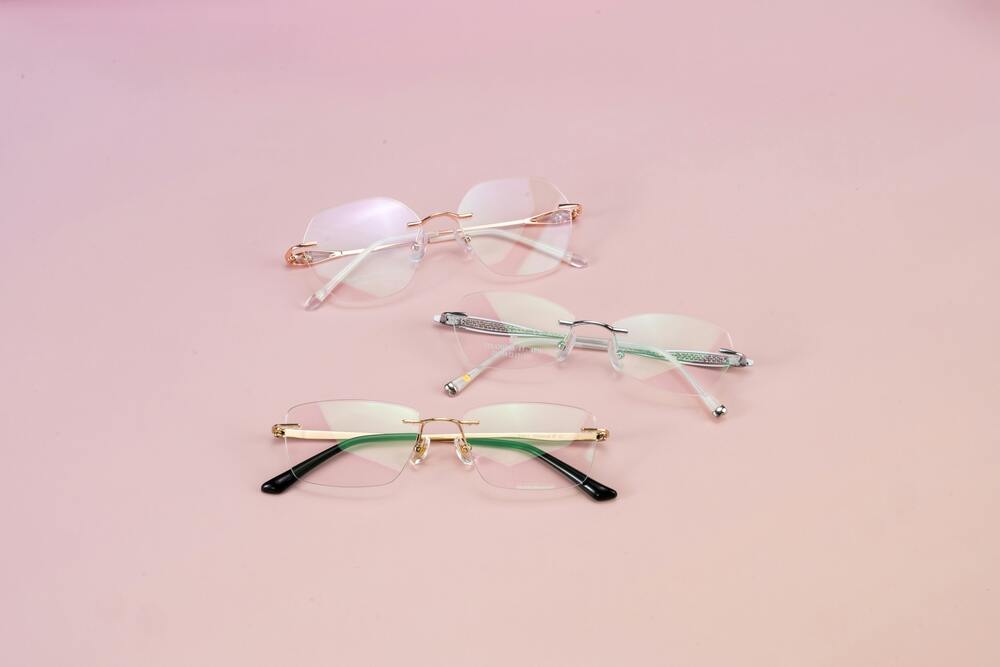
  • Rimless glasses
  • Titanium glasses
  • Designer brands (Ray-Ban, Oakley, Prada, Persol, etc.)

If your glasses are structurally damaged, professional repair can often restore them instead of replacing them.

Nationwide Eyeglass Repair Since 1987

Founded in 1987 in Mesa, Arizona, All American Eyeglass Repair has helped customers nationwide restore broken, loose, and misaligned frames. Led by a licensed optician with over 50 years of experience, we specialize in precision adjustments, hinge repair, nose pad replacement, and advanced laser welding for delicate eyewear.

We offer both walk-in service and a secure national mail-in eyeglass repair service, making it easy to fix slipping or damaged glasses from anywhere in the U.S.

Stop Constantly Pushing Your Glasses Back Up

If home adjustments haven’t solved the problem, professional repair can restore proper fit and comfort — often at a fraction of the cost of replacing your frames.

Request a repair quote today and let our technicians professionally adjust, realign, or repair your glasses.

Start Your Eyeglass Repair →

Frequently Asked Questions About Slipping Glasses

Why do my glasses slide down even after tightening?

The issue may involve worn nose pads, improper bridge size, or frame misalignment rather than loose screws.

Can I adjust plastic frames at home?

Plastic frames require controlled heating. Improper adjustments can warp or crack the frame.

Are silicone nose pads better for slipping glasses?

Yes, silicone pads typically provide better grip and comfort compared to hard plastic.

Can titanium glasses be safely adjusted?

Yes, but they require professional tools and expertise. Improper bending can damage the metal.

How much does nose pad replacement cost?

Costs vary depending on frame type and condition. Professional replacement ensures proper alignment and durability.

Blog Overview: 

Before you reach for the Super Glue, read this! Our expert technician explains the dangers of DIY glue repairs and offers three safe, temporary hacks to keep your glasses functional.

What to Know Before Attempting to DIY Eyeglass Repairs at Home

We’ve all been there. It’s 8:00 PM on a Sunday, or you’re halfway through a road trip, and snap—your glasses are in two pieces. In that moment of panic, your first instinct is probably to reach for the junk drawer and pull out the Super Glue.

Please, put the glue down. At All American Eyeglass Repair, our technician Brian has seen it all. While we understand the urgency of needing to see, some DIY “fixes” can turn a simple repair into a total loss. Here is the expert guide on what you should—and absolutely should not—do when your frames fail.

The “Absolute No” of Eyeglass Repair: The Glue Trap

It’s the most common mistake we see, and it’s often the most expensive one. Using household adhesives like Super Glue or Krazy Glue on your frames is a recipe for disaster.


Why Glue is the Enemy:

1. It Doesn’t Actually Hold

Eyeglass hinges and bridges are high-tension areas. Glue is brittle; the moment you try to put your glasses on, the tension will cause the glue to snap again.

2. The “Fogging” Effect

Super Glue releases chemical vapors as it cures. If those vapors touch your lenses, they can create a permanent, cloudy “fog” that ruins your expensive anti-reflective coatings.

3. It Prevents Professional Repair

Once glue gets into a metal hinge or onto acetate, it’s incredibly difficult for a professional to remove. In many cases, a frame that could have been laser welded in minutes becomes unrepairable because the glue has contaminated the material.

The “Safe” DIY Hacks: Temporary Fixes That Work

If a screw falls out and your temple (the arm) comes off, you don’t need glue—you just need a temporary “pin” to hold things together until you can get to us.

  • The Toothpick Trick

If the hinge holes are still aligned, slide a wooden toothpick through the hole where the screw used to be. Snap off the excess wood so it’s flush with the frame. The friction of the wood is usually enough to hold the arm in place for a few hours.

  • The Bread Tie Bypass

Strip the plastic or paper off a standard kitchen bread tie to reveal the thin wire inside. Thread that wire through the hinge and twist it tight. It’s not pretty, but it’s secure and—most importantly—it won’t damage your frames.

  • The Paperclip Pin

A small paperclip can be threaded through the hinge and bent at the ends. This acts as a sturdy temporary hinge pin that is easy for a professional to remove later without leaving a trace.

When to Call in the Experts

Emergency hacks are meant to get you through a few hours, not a few weeks. If your frames have snapped at the bridge or the hinge is completely sheared off, it’s time for a permanent solution.

How All American Eyeglass Repair Saves the Day:

  • Precision Laser Welding – We can fuse metal frames back together with a bond that is virtually invisible and stronger than the original.
  • Authentic Parts – We carry an massive inventory of screws, hinges, and temples for brands like Ray-Ban, Oakley, and Gucci.
  • Same-Day Service – You can walk into any of our 17 locations or use our convenient Mail-In Service to get your glasses fixed and back on your face fast.

Conclusion

A break in your glasses is an emergency, but it doesn’t have to be a catastrophe. Skip the glue, use a temporary “pin,” and let a professional handle the rest. Your vision (and your wallet) will thank you.

Did your glasses just break? Don’t panic! Visit our store or mail in your glasses today for a professional restoration.

Simple Fixes to Make Your Eyeglasses Fit Perfectly

For many people, the struggle is real when it comes to keeping their eyeglasses comfortable. From slipping and sliding to nose pinching, people are living with uncomfortable eyeglasses that could be easily repaired/adjusted by All American Eyeglass Repair.

All these repairs are simple and can be done in under an hour. Most run from $39 to $69.
# 1 – Loose Frames
It can be quite annoying when your glasses sit too low on your nose. You’re constantly pushing them up and after a full day, that can become a pain in the you know what.

At All American Eyeglass Repair, we can easily and quickly tighten loose eyeglass frames, so they fit your face properly. Plastic or wire frames, it makes no difference. We can fix them.
# 2 – Loose Temples
The temple (or the arm of the frame) can become loose and make your eyeglasses droop down on your face. Although there can be a variety of causes for this problem, loose temples are often the culprit. We’re experts at diagnosing and fixing these issues and can do so on wire or plastic frames.
# 3 – Too Tight, Especially Around the Nose
Eyeglass frames can also be too tight, making them uncomfortable and even causing headaches.

Oftentimes, we can fix this problem with a simple adjustment to the nose pads on your eyeglass frames. We caution against trying this yourself. You’d be amazed at the number of eyeglass frames we see each year with defective nose pads due to attempted repairs by an owner. Although we do it quickly, repairs of this nature require an expert touch.
# 4 – Frames Are Bent, or Sit Crooked on Your Face
My friend Brian has a bad habit of leaving his Maui Jim sunglasses on his car seat when getting out of his car. And yes, you guessed it. Brian returns to the car, hops in it and sits squarely on his sunglasses. The result? A bent frame or temple.

At All American Eyeglass Repair, we fix bent eyeglass frames or temples. And sometimes frames need adjusted to their proper balance to sit properly on your face. Come into any of our locations or mail your eyeglasses to one our national repair centers near you. We guarantee our work and most repairs cost between $39 and $69.

Blog Overview

Despise dirty lenses? This in-depth guide reveals the professional secret to a DIY eyeglass cleaning solution that is safe for all coatings and easy to make at home.

The Ultimate DIY Eyeglass Cleaner: Professional Results at Home

Let’s be honest: there is nothing more distracting than a smudge right in your line of sight. Whether it’s a fingerprint, a splash of cooking oil, or just the daily buildup of facial oils, dirty lenses don’t just look bad—they can cause eye strain and headaches.

At All American Eyeglass Repair, we use professional-grade ultrasonic cleaners and proprietary solutions to make your frames shine like new. But what do you do when you’re at home and your vision starts to get cloudy?

You make your own. Here is the definitive guide to the safest, most effective DIY eyeglass cleaner.

Why Most People Clean Their Glasses Wrong

Before we get to the recipe, we have to talk about the “shirt-tail” habit. We’ve all done it—using a t-shirt, a paper towel, or a napkin to wipe our lenses.

Stop! Most fabrics contain tiny abrasive fibers (and paper towels are literally made of wood pulp). Wiping your lenses with these is like using fine-grit sandpaper. Over time, you’ll develop a “cloud” of micro-scratches that can’t be polished out.

The “Magic” DIY Cleaning Recipe

This mixture is safe for anti-reflective (AR) coatings, polarized lenses, and blue-light filters.

What You’ll Need:

  • A Small Spray Bottle – (2 oz or 4 oz works best).
  • Dish Soap: Use a clear, lotion-free brand (like Dawn). Avoid soaps with “moisturizers,” “essential oils,” or “hand-softening” ingredients, as these leave a greasy film.
  • Water – Distilled water is best to avoid mineral spots, but tap water works in a pinch.
  • Optional – Isopropyl Alcohol (70%): Only use this if your lenses do not have special coatings. If you have high-end AR coatings, stick to just soap and water.

The Instructions:

  1. The Mix

Fill your spray bottle 70% with water and add a few drops of dish soap. If you want a quick-drying “streak-free” finish (and your lenses are uncoated), you can fill it 50/50 with water and 70% Isopropyl alcohol.

  1. The Prep

Rinse your glasses under lukewarm tap water first. This washes away tiny dust particles that could scratch the lens during the wiping process.

  1. The Spray

Give the bottle a gentle shake and spray both sides of the lenses.

  1. The Rub

Use your thumb and forefinger to gently lather the soap across the lens and the nose pads (where most oil builds up!).

  1. The Rinse & Dry

Rinse under lukewarm water. Shake off the excess droplets.

  1. The Polish

Using a clean microfiber cloth, polish the lenses in a circular motion.

Pro-Tips for “Obsessively” Clean Lenses

1. Watch the Water Temperature

Never use hot water. High heat can cause the different layers of lens coatings to expand at different rates, leading to “crazing”—a web of tiny cracks in the coating that ruins the lens. Stick to lukewarm.

2. Clean Your Microfiber Cloth

If your microfiber cloth is dirty, you’re just moving grease around. Toss your cloths in the laundry, but do not use fabric softener or dryer sheets. These products coat the fibers in wax, which will then streak your glasses.

3. Don’t Forget the Frames

Skin oils and makeup accumulate on the bridge and temples. This doesn’t just look messy; it can actually degrade the finish of acetate frames over time. Use your DIY spray on the entire frame, not just the glass!

In Summary

You don’t need to spend $15 on a tiny bottle of “designer” lens cleaner. With just a bit of dish soap and some water, you can achieve that professional, crystal-clear shine at home.

Tried our recipe? We’d love to hear how it worked for you! And remember, if your glasses are clean but still feel “off,” they might need a professional alignment. Visit one of our 17 locations and let us give your frames the VIP treatment.

We’ve all been there. You’re on a business trip, at a wedding, or mid-hike when the unthinkable happens: a lens pops out, or a screw vanishes into the carpet. Suddenly, the world is a blur.

At All American Eyeglass Repair, we see the aftermath of these “eyeglass emergencies” every day. While nothing replaces a professional, permanent fix, these three temporary hacks will keep your frames functional until you can get to one of our 17 locations.

The Golden Rule: The “No-Glue” Policy

Before we dive in, let’s talk about the one thing you must never do: Do not use Super Glue.

It is tempting to “dab” a bit of glue on a snapped bridge or a loose hinge. However, Super Glue releases vapors that can permanently “fog” or crack your lens coatings. Furthermore, once glue is on a frame, it makes it nearly impossible for a professional to weld or repair the part later. Step away from the glue!

Emergency Hack #1: The “Ribbon Trick” for Rimless Lenses

If you have semi-rimless frames (the kind with a clear “fishing line” holding the bottom of the lens), a dropped pair often results in the lens popping out. Trying to pull that line back into the groove with your fingernails is frustrating and can snap the cord.

The Fix:

  1. Find a piece of thin ribbon, dental floss, or even a sturdy piece of string.
  2. Loop the string around the clear monofilament wire.
  3. Position the top of the lens into the metal groove of the frame.
  4. Use the string to pull the monofilament wire outward, stretching it just enough to slide it over the edge of the lens.
  5. Slide the string along the perimeter of the lens, guiding the wire into the lens groove as you go. Once the wire is seated, simply pull the string out.

three piece drill mount eyeglasses

Emergency Hack #2: The Lost Hinge Screw

Losing a tiny screw is the most common eyeglass fail. If the temple (arm) has fallen off, you need a temporary “pin” to hold the hinge together.

The Fixes:

  • The Paperclip Method – Straighten a small paperclip and feed it through the hinge holes. Once it’s through, bend both ends of the wire so it stays secure. If you have a wire cutter or heavy-duty scissors, trim the excess so you don’t poke yourself.
  • The Toothpick Method – In a restaurant? Stick a wooden toothpick through the hinge. Break off the ends so they are flush with the frame. The friction of the wood is often enough to hold the arm on for a few hours.
  • The Bread Tie – Strip the plastic/paper off a twist-tie, feed the wire through, and twist it tight.

Emergency Hack #3: The “Rubber Band” Tension Trick

Over time, hinges can become “sprung” or loose, causing your glasses to slide down your nose constantly. This is especially common with spring hinges that have lost their tension.

The Fix:

  1. Find two small hair elastics or tiny rubber bands (the kind used for braces are perfect).
  2. Slide one rubber band up each temple (arm) until it reaches the hinge.
  3. Position the rubber band so it sits in the “V” where the arm meets the frame.
  4. The extra padding of the rubber band creates “counter-tension,” forcing the arms to stay tighter against your head and keeping your glasses in place.

When to See a Professional

These hacks are designed to get you through the day, not the month. Temporary fixes can put uneven stress on your frames, eventually leading to a more expensive break.

Once the “emergency” is over, bring your frames to All American Eyeglass Repair. We specialize in:

  • Precision Laser Welding: For snapped metal frames.
  • Part Replacement: Authentic screws, temples, and nose pads.
  • Same-Day Service: Walk into any of our locations or use our easy mail-in service.

Don’t let a temporary fix become a permanent problem. Find your nearest All American Eyeglass Repair location here.

Blog Overview:

Don’t let winter fog blind you! This guide explains why glasses fog up when you come inside and provides three easy ways to keep your vision crystal clear in the cold.


It happens every year like clockwork. You walk from the freezing winter air into a warm coffee shop or your own home, and—poof—you’re instantly blinded by a thick layer of fog.

Foggy lenses aren’t just an annoyance; they can be a safety hazard, especially when driving or navigating icy stairs. At All American Eyeglass Repair, we hear this complaint constantly from November through March. Here is the science behind the fog and three professional ways to stop it.

Why Do Glasses Fog Up in the Cold?

The culprit is a simple scientific process called condensation. Your eyeglass lenses get cold while you are outside. When you enter a warm room, the moisture (water vapor) in the warm indoor air hits the cold surface of your lens.

Because the lens is significantly cooler than the air around it, the gas turns back into a liquid. These tiny droplets of water cling to the surface of your lens, creating that opaque “fog” that blocks your vision.

Tip #1: Choose the Right Materials and Coatings

If you find yourself constantly battling fog, your lens choice might be the issue.

  • Lens Material – Plastic and polycarbonate lenses are much better at resisting temperature-induced fogging than traditional glass lenses because they don’t hold the cold as long.
  • Anti-Fog Treatments – Many high-end Anti-Reflective (AR) treatments now come with integrated hydrophobic (water-repelling) layers. These coatings make it harder for moisture to “grip” the lens.
  • Specialized Gear – If you are an athlete, look for sport-specific sunglasses or ski goggles. These are designed with integrated venting that allows air to flow behind the lens, equalizing the temperature and preventing moisture buildup.

Tip #2: Keep Your Lenses “Squeaky” Clean

Believe it or not, a dirty lens fogs up faster than a clean one. Dirt, oils from your skin, and micro-smudges provide a textured surface for water droplets to latch onto.

  • The Solution

Use a dedicated eyeglass cleaning solution or our DIY soap-and-water mix. By keeping the surface of the lens perfectly smooth, moisture is more likely to bead off rather than settle.

  • Anti-Fog Wipes

You can also purchase specialized anti-fog cloths or sprays. These leave a microscopic, transparent film on the lens that lowers surface tension, preventing fog from forming.

Tip #3: Optimize Your Frame Fit (The “Airflow” Factor)

Sometimes the “fog” isn’t coming from the room—it’s coming from you. If your frames sit too close to your face, the heat and moisture from your own skin and breath get trapped behind the lenses.

  • The Adjustment

Frames should have a small gap between the lens and your face to allow for natural air circulation. If your glasses are sitting flush against your cheeks or forehead, they need a professional adjustment.

  • The Nose Pad Fix

On metal frames, the nose pads can be adjusted to sit slightly further away from your face. This small increase in “air gap” can make a massive difference in how quickly your lenses clear up.

What NOT to Do (The Danger Zone)

When you’re frustrated by fog, it’s easy to reach for the wrong solution. Avoid these at all costs:

  • Never use Hot Water

You might think heating up the lenses will prevent fog, but extreme heat can cause crazing (tiny cracks) in your lens coatings.

  • Avoid Household Chemicals

Stay away from vinegar, ammonia, or glass cleaners like Windex. These chemicals are too harsh for modern lens treatments and can strip away your UV protection and AR coatings.

  • The “Spit” Myth

Some people suggest using saliva (a trick used by divers). Don’t do it. Saliva contains oils and bacteria that will smudge your lenses and could lead to eye irritation.

In Summary

Winter shouldn’t mean losing your vision every time you walk through a door. By choosing the right coatings, keeping your lenses clean, and ensuring a proper frame fit, you can stay fog-free all season long.

If your frames feel too tight or sit too close to your face, come see us! We can provide a custom winter adjustment to keep the air flowing and your vision clear. Visit any one of our eyeglass repair locations or mail-in your eyewear.

Proper Techniques to Handle Your Eyeglasses and Prolong Their Lifespan

Watch Time: 1 minute

In this short video, Glenn of All American Eyeglass Repair shows you the proper way to put on and take off eyeglasses.

By watching this video you will learn:

  • The proper way to put on and take off eyeglasses
  • Why taking off your glasses with one hand is the wrong thing to do
  • Common eyeglass care tips to prolong the life of your frames

Transcript of Video:

Hi. This is Glenn with All American Eyeglass Repair. Let’s talk about how to take your frames on and off.

You always want to use two hands. Take your frames off and also, to put them on.

Think about it. We are creatures of habit. I would never wear my watch on my other wrist. When I speak on the phone, I use the same ear every single time.

If I do use one hand, more than likely I’m going to go the same way every time, putting that undo pressure you just saw on the bridge, the trim piece, and also the temple.

You’ll notice on this Ray Ban frame, spring temples. Again, use just one hand, you end up putting undo pressure on that spring. If it pops out, we’ll be replacing it.

Another frame we see a lot of…the flex-on titanium frame. What happens with this one? You want to show people how this works. You end up flexing it back and forth. More than likely you’re going to flex it the same way every time. After a while, it can get out of align.

I hope this information was helpful. And again, if you need any repair done, please contact All American Eyeglass Repair.

Mail your eyeglasses to us for repair: https://americaneyeglassrepair.com/services/mail-in-glass-repair/.

Bring your eyeglasses for repair to one of our stores. Find a store near you: https://americaneyeglassrepair.com/locations/

To get more eyeglass care and repair tips, subscribe to our YouTube channel https://goo.gl/mLpnEx.

Essential Tips for Using an Eyeglass Repair Kit Safely and Effectively

Watch time: 1 minute 17 seconds

See Glenn from All American Eyeglass Repair share his opinions and knowledge about eyeglass repair kits.  He describes the parts of an eyeglass repair kit and what each is used for.

By watching this video, you will discover:

  • How much eyeglass repair kits costs
  • The different parts of a typical eyeglass repair kit and how to use them
  • Situations where an eyeglass repair kit will not be able to help

To get more eyeglass care and repair tips, subscribe to our YouTube channel https://goo.gl/mLpnEx.

For the finest in mail in or walk in eyeglass or sunglass repair services, visit All American Eyeglass Repair. https://americaneyeglassrepair.com/